


Disrupting Markets: A strategic perspective on the Ten Types of Innovation model
Innovation has always been the primary driver of organizational and brand transformation. However, in today’s landscape, shaped by Market Disruption, its role has been elevated to a vital necessity. Market disruption occurs when an idea, technology, or business model can overturn industry rules and dismantle long‑standing structures. These sudden shifts often catch established companies off guard, creating space for innovative newcomers.
In such circumstances, merely “improving the product” is no longer sufficient. Brands must holistically re‑create their value chain, revenue model, communication channels, and customer experience. The book Ten Types of Innovation by Larry Keeley and colleagues, based on three decades of research at Doblin, offers an analytical framework that divides innovation into ten complementary types, illustrating the path from scattered ideas to an integrated innovation architecture.
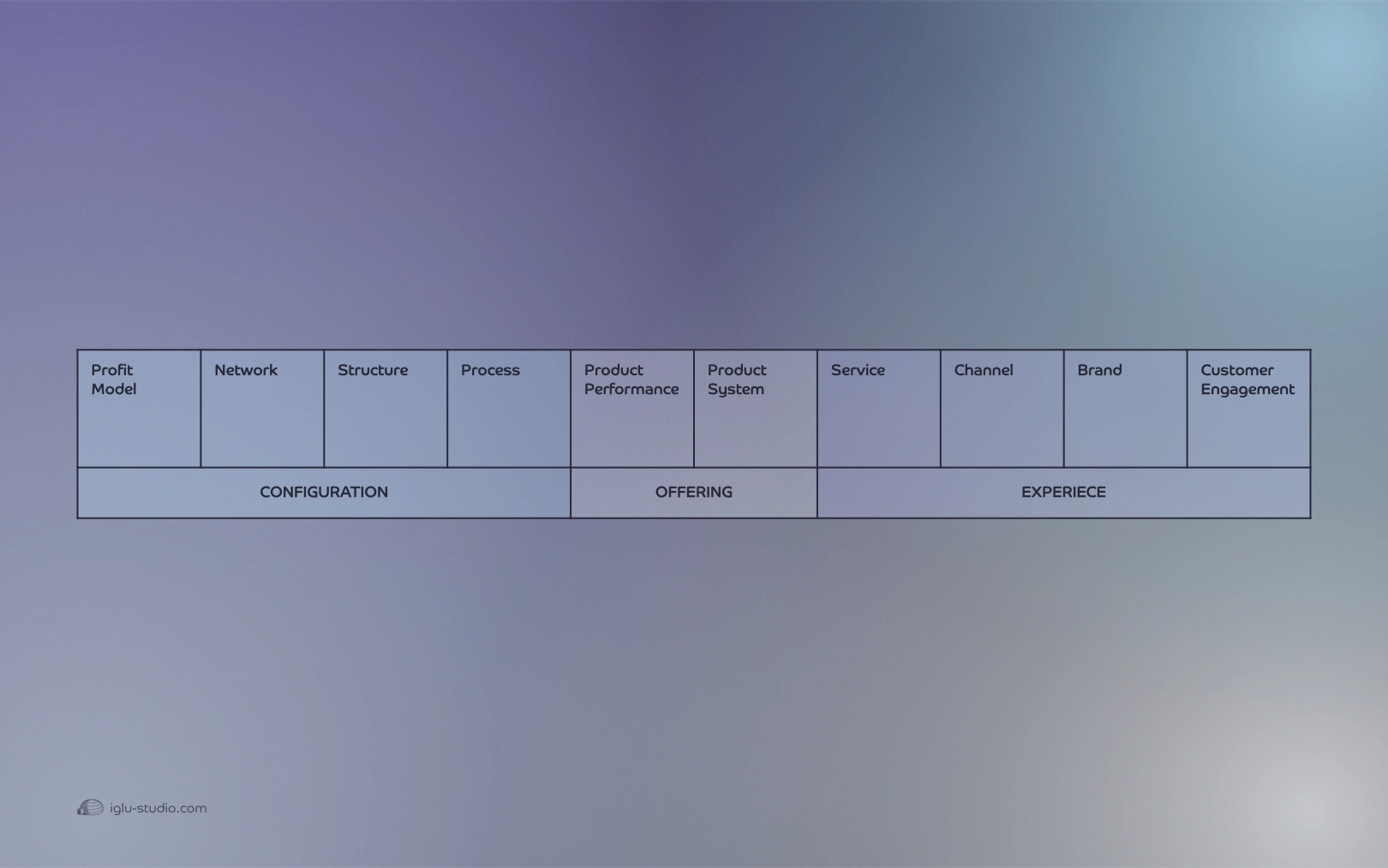
The Three Core Areas of Innovation
The ten‑type model is divided into three major areas:
-
Configuration: Innovation in the business’s back end: processes, structures, revenue models, and resource synergies.
-
Offering: Innovation in the essence of the product or service and its complementary systems.
-
Experience: Innovation in how customers interact with the brand, across all touchpoints.
First Area: Configuration
1 – Profit Model Innovation
Profit model innovation refers to redesigning how value is converted into revenue. This may range from altering pricing or payment structures to creating entirely new revenue streams. Many industries have long‑standing traditions and patterns of earning; changing this paradigm can shift competitive boundaries.
Beyond pricing innovation, the goal is to identify models that generate stable cash flow and reduce revenue risk. Aligning the profit model with other components of the business model is critical to success.
-
Global example: Netflix replaced single‑unit film rentals with unlimited monthly subscriptions, lowering customer entry barriers and generating recurring revenue.
-
Regional example – Iran: Filimo, with its subscription model and local content production, has achieved both competitive advantage and user loyalty.
2 – Network Innovation
This type of innovation focuses on creating value through external strategic partnerships. Innovative networking enables a business to access resources, capabilities, and markets that would be impossible to leverage alone.
Its success depends on accurately understanding partner motivations, sharing benefits transparently, and building stable trust structures. When executed properly, it can become a long‑term competitive advantage.
-
Global example: Cisco built an ecosystem of hardware and software partners, dramatically accelerating new product introductions.
-
Regional example – Iran: Digikala has integrated a network of independent sellers and logistics startups to build a nationwide marketplace.
3 – Structure Innovation
Structural innovation addresses the reorganization of assets, work culture, and reward systems. These changes can remove barriers to innovation, enhance teamwork, and improve adaptability to market shifts.
It may include creating multidisciplinary teams, adopting network structures, or implementing decentralized decision‑making. The most critical factor is ensuring structural alignment with strategic objectives.
-
Global example: Google’s 20% Time policy provided the space for employees to create breakthrough ideas such as Gmail.
-
Regional example – Iran: Snapp implemented a modular organizational structure with independent product teams, increasing both innovation speed and agility.
4 – Process Innovation
This form of innovation focuses on improving or creating new production, distribution, or service delivery processes. Its primary aim is to boost efficiency, reduce costs, and enhance quality.
Innovative processes can include using advanced manufacturing technologies, optimizing the supply chain, or applying lean management systems. Process innovation has a direct impact on competitiveness and profitability.
-
Global example: Toyota revolutionized the automotive industry’s productivity and quality with its Lean Manufacturing system.
-
Regional example – Iran: Kaleh, through integrated and intelligent production lines, has shortened product innovation cycles and improved market responsiveness.
Second Area: Offering
5 – Product Performance Innovation
This area focuses on improving the features, performance, and quality of products or services. Although a familiar and often overemphasized form of innovation, it must go beyond incremental improvements to create genuine differentiation, anticipating both current and future customer needs.
Such advances may come from superior technology, distinctive design, or exceptional quality standards.
-
Global example: Dyson redefined vacuum cleaner performance standards through cyclone technology.
-
Regional example – Iran: Mamut Diesel improved the safety and quality of heavy‑duty trucks using up‑to‑date technologies.
6 – Product System Innovation
Product system innovation centers on building an ecosystem of complementary products or services that increase the value of each component and strengthen brand loyalty.
The system must be designed so that combined use enhances the user experience beyond the sum of individual products. This often results in strong loyalty and recurring revenue.
-
Global example: Apple has created an ecosystem—iPhone, Mac, and Apple Watch—so interconnected that leaving it becomes difficult for users.
-
Regional example – Iran: Golrang, with its unified range of personal and household care products, provides customers with an integrated brand experience.
Third Area: Experience
7 – Service Innovation
This type of innovation improves how support and added value are delivered to customers, including personalized services, rapid assistance, or customer training.
It can create a brand differentiator that surpasses the product itself, building a lasting positive impression.
-
Global example: Zappos is renowned not just for selling shoes, but for its exceptional customer service.
-
Regional example – Iran: Snappfood has improved customer satisfaction through prompt support and precise order tracking.
8 – Channel Innovation
Channel innovation seeks more effective ways to deliver products or services to customers—digital channels, direct‑to‑consumer models, or exceptional in‑person experiences.
Innovative channels can enhance the buying experience, simplify access, and reduce distribution costs.
-
Global example: Tesla has redefined automotive purchasing by selling directly to consumers and bypassing dealerships.
-
Regional example – Iran: Basalam created a decentralized network to connect local producers to online markets.
9 – Brand Innovation
Brand innovation seeks to build a unique identity and meaning for customers, achieved through brand storytelling, iconic experiences, or aligning brand values with those of customers.
An innovative brand can evolve beyond products to become a cultural symbol.
-
Global example: Nike has turned its brand into a symbol of athletic motivation through inspiring narratives of effort and success.
-
Regional example – Iran: Chai Shahrzad has established a premium market position through a luxury positioning strategy and narrative branding.
10 – Customer Engagement Innovation
This innovation focuses on creating new methods for attracting customer participation, loyalty, and deeper interaction, such as interactive platforms, gamification, or customer loyalty programs.
It transforms the brand–customer relationship from a one‑way message into a continuous and dynamic dialogue.
-
Global example: LEGO’s LEGO Ideas platform involves customers directly in product development.
-
Regional example – Iran: Hamrah Aval maintains customer relationships through loyalty schemes and exclusive content.
The Importance of Combinatorial Innovation
Research shows that the most successful innovations are often combinations of multiple types. By integrating several dimensions simultaneously, companies not only create stronger competitive advantages but also raise barriers to imitation.
Application in Brand Strategy and Business Growth
This model serves as a tool for brand managers to identify both weaknesses and hidden potential within their business models. It also supports transforming brand communications from simple messaging into a comprehensive and distinctive experience.
The Ten Types of Innovation framework provides a roadmap for holistic innovation across every dimension of an organization. Applied intelligently, it enables businesses not merely to survive but to thrive in the face of disruptive market forces.
Source Book Information
Title: Ten Types of Innovation: The Discipline of Building Breakthroughs
Authors: Larry Keeley, Ryan Pikkel, Brian Quinn, Helen Walters
Publication Year: 2013
Publisher: John Wiley & Sons
Publication Location: Hoboken, New Jersey, USA
ISBN‑13: 978‑1‑118‑50124‑5
Page Count: 331 pages