


The Psychological Map of Great Design: Three levels, seven stages
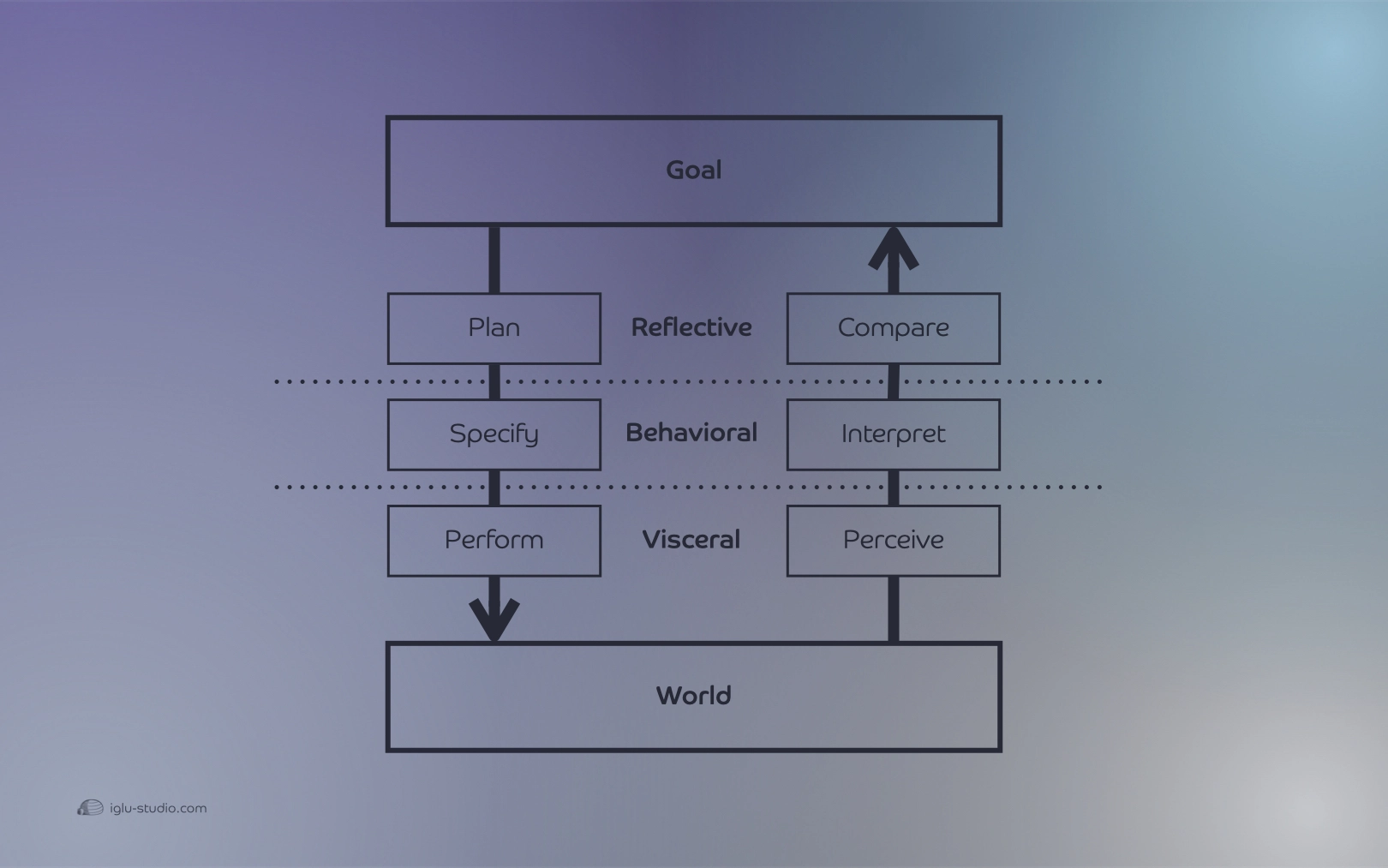
In The Design of Everyday Things, Don Norman blends cognitive psychology and design principles to show how human experience with objects and systems occurs at three distinct processing levels: Visceral, Behavioral, and Reflective. When integrated with the seven stages of the Action Cycle, this framework provides a precise map of how people interact with products from the first sensory reaction to long-term meaning. Designers who understand these levels can create experiences that are visually appealing, functionally satisfying, and emotionally resilient.
1. Visceral Level — Instant, sensory-driven experience
The visceral level captures the first, rapid, subconscious reaction to a product. This is a sensory judgment driven by visual, auditory, tactile, olfactory, or even gustatory input. Color, form, sound, and texture can instantly generate attraction or aversion. At this point, analytical reasoning has not yet begun; the brain responds only to sensory stimuli. The elegant visual layout of a user interface or the signature click of a luxury car door closing are examples of visceral reactions. This level aligns most closely with the Perceive stage in the Action Cycle, where sensory data are registered and given an immediate emotional tone.
2. Behavioral Level — Performance and usability
Beyond initial impressions, the behavioral level evaluates the functional performance of the product. Does it work as expected? Is it easy to use? Here, design must deliver on its promise. Smooth operation, intuitive control, proper feedback, and predictable behavior are essential. Seamless app interaction or precise photographic output from a camera speak to excellence in behavioral design. This level directly connects to the Specify, Perform, Interpret, and Compare stages of the Action Cycle, as it defines, executes, and interprets user actions against expectations.
3. Reflective Level — Meaning and self-image
The reflective level engages conscious thought, meaning-making, and self-image. It determines whether a product becomes part of the user’s life story. Often built upon positive visceral and behavioral experiences, reflection cements loyalty and emotional attachment. A long-standing affinity toward a brand or sentimental value attached to a family heirloom is rooted here. This level connects strongly with Goal and Plan in the Action Cycle, and plays a decisive role in Compare, where final judgments and decisions are made.
Linking the three levels to the Action Cycle
Norman’s Action Cycle consists of seven stages: Goal → Plan → Specify → Perform → Perceive → Interpret → Compare.
- Goal: The starting point where the user defines their desired outcome — a reflective process shaped by deeper motivations.
- Plan: Strategizing the method and resources to achieve the goal — still in the reflective domain.
- Specify: Detailing the actions needed — driven by behavioral considerations.
- Perform: Executing the action — where performance and physical interaction dominate.
- Perceive: Receiving sensory feedback from the action — the visceral response comes into play.
- Interpret: Making sense of the perceived feedback — combining behavioral analysis with occasional reflective insights.
- Compare: Assessing whether the results match the goal — reflective evaluation seals the outcome.
Any breakdown between these stages can compromise the user experience. Designers must ensure continuity and coherence across all levels and stages.
Practical implications for designers
Exceptional design balances all three processing levels. A product with beautiful aesthetics but poor performance will fail quickly; conversely, a technically excellent product lacking emotional appeal often feels lifeless. Each feature should resonate with at least two levels, and user testing should measure visceral reactions, behavioral performance, and reflective meaning simultaneously.
Source Metadata
• Title: The Design of Everyday Things (Revised and Expanded Edition)
• Author: Don Norman
• Publication Year: 2013
• Publisher: Basic Books
• Place of Publication: New York, USA
• ISBN: 978‑0‑465‑05065‑9
• Number of Pages: 368 pages