


Shared Understanding: The key to human-centered design
In Emotional Design: Why We Love (or Hate) Everyday Things (2003), Donald A. Norman explores the deep psychological layers behind our interactions with products. Among the foundational concepts he discusses is the Conceptual Model—a framework that explains how a designer’s intentions and a user’s understanding meet, or sometimes fail to meet, through the product itself. When these models align, every interaction feels clear and intuitive; when they clash, the experience can quickly turn confusing and frustrating.
Understanding Conceptual Models
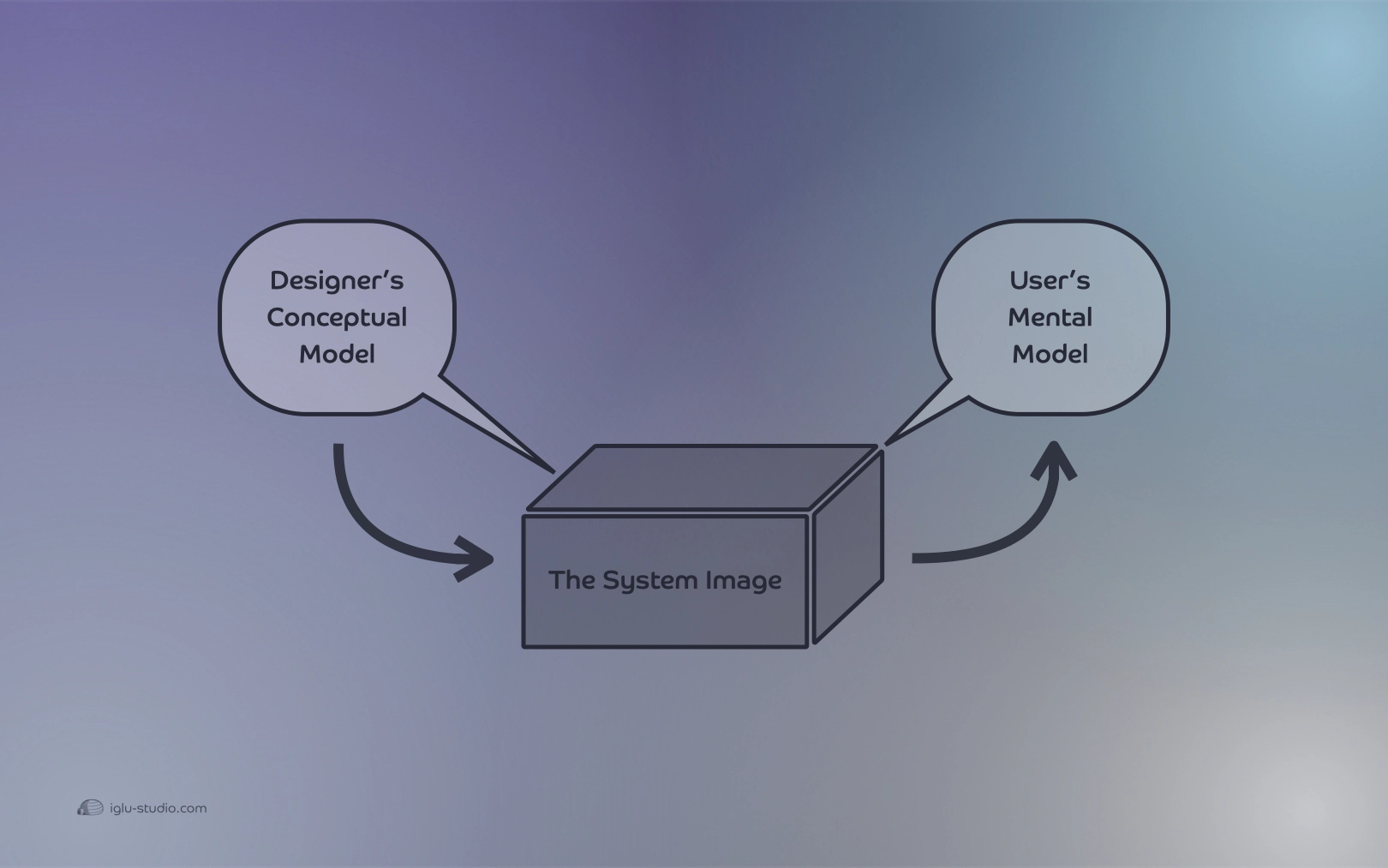
Norman defines a conceptual model as the designer’s mental representation of how a product is supposed to work. This model is never directly handed to the user; instead, it is communicated through the System Image—the actual product interface, instructions, feedback signals, and visual cues. The user, interacting with the system, forms their own mental model. Ideally, the system image should faithfully translate the designer’s conceptual model into a form users can easily grasp.
The System Image acts as the only bridge between the designer and the user. Any misinterpretation or ambiguity within it widens the gap between intention and perception.
Designer’s Model vs. User’s Model
The designer’s conceptual model often comes from deep technical understanding and a clear vision of purpose. It incorporates assumptions about user capabilities, workflows, and problem-solving methods.
Users, however, approach the system with prior experiences, expectations, and mental shortcuts. Their User’s Mental Model emerges after interacting with the product image. If what they infer matches the designer’s intentions, interactions flow naturally. But if the cues are inconsistent or misleading, the user forms an incorrect model—leading to errors, confusion, and dissatisfaction.
When Models Align
Alignment occurs when the system image is both accurate and intuitive. Consider a smartphone camera app: the icon of a camera conveys purpose immediately, and tapping it reveals functions where labels and controls match the user’s expectations. The design supports the user’s goal without requiring thought, reflecting both visceral clarity and behavioral efficiency.
When Models Clash
Clashes arise when the product behaves differently from what its cues promise. Imagine a “Save” icon that closes a document instead, or a touch interface that reacts sluggishly. These violations break trust, frustrate the user, and weaken emotional connection. From Norman’s perspective, these failures are often rooted in the designer neglecting to communicate their conceptual model clearly through the system image.
Designing for Alignment
To align conceptual models, designers must:
- Use clear affordances and feedback loops.
- Employ language, symbols, and metaphors familiar to the target audience.
- Test interfaces with real users to uncover mismatches early.
- Avoid complexity for complexity’s sake—clarity builds confidence.
Ultimately, the goal is not just usability but emotional resonance—the feeling that the product “understands” the user.
Conceptual models are the invisible architecture of user experience. They dictate whether a design feels natural or alien. As Donald Norman reminds us, the designer’s vision is meaningless unless it is fully and faithfully communicated through the product’s system image. Closing the gap between the designer’s conceptual model and the user’s mental model is, perhaps, the most powerful way to create products that are not only functional but loved.
Source Metadata
• Title: Emotional Design: Why We Love (or Hate) Everyday Things
• Author: Donald A. Norman
• Publication Year: 2003
• Publisher: Basic Books
• Place of Publication: New York, USA
• ISBN: 0‑465‑05135‑9
• Number of Pages: 268 pages